Front steps look simple on paper. Two risers. Maybe three. A small landing. For years, they’re barely noticeable. Then one day, they’re the hardest part of leaving the house.
That’s when homeowners start asking the question: can a wheelchair lift be installed right at the front entryway?
The short answer is yes. The real answer depends on layout, grade, and how the home is used day to day.
Why Front Entryways Become the Biggest Barrier
Most mobility conversations focus on inside stairs. Bedrooms upstairs. Basements. Split-level living rooms. But the front door is often the first real obstacle.
Raised porches. Brick steps. Garage-to-entry elevation changes. They’re common design features. They just weren’t built with long-term mobility in mind.
At Staying Home, we’ve seen how entry access can quietly become stressful. Not dramatic. Just inconvenient enough to limit independence. And when leaving the house feels complicated, that affects more than convenience.
Planning early makes it easier.
Can a Wheelchair Lift Be Placed at the Front Door?
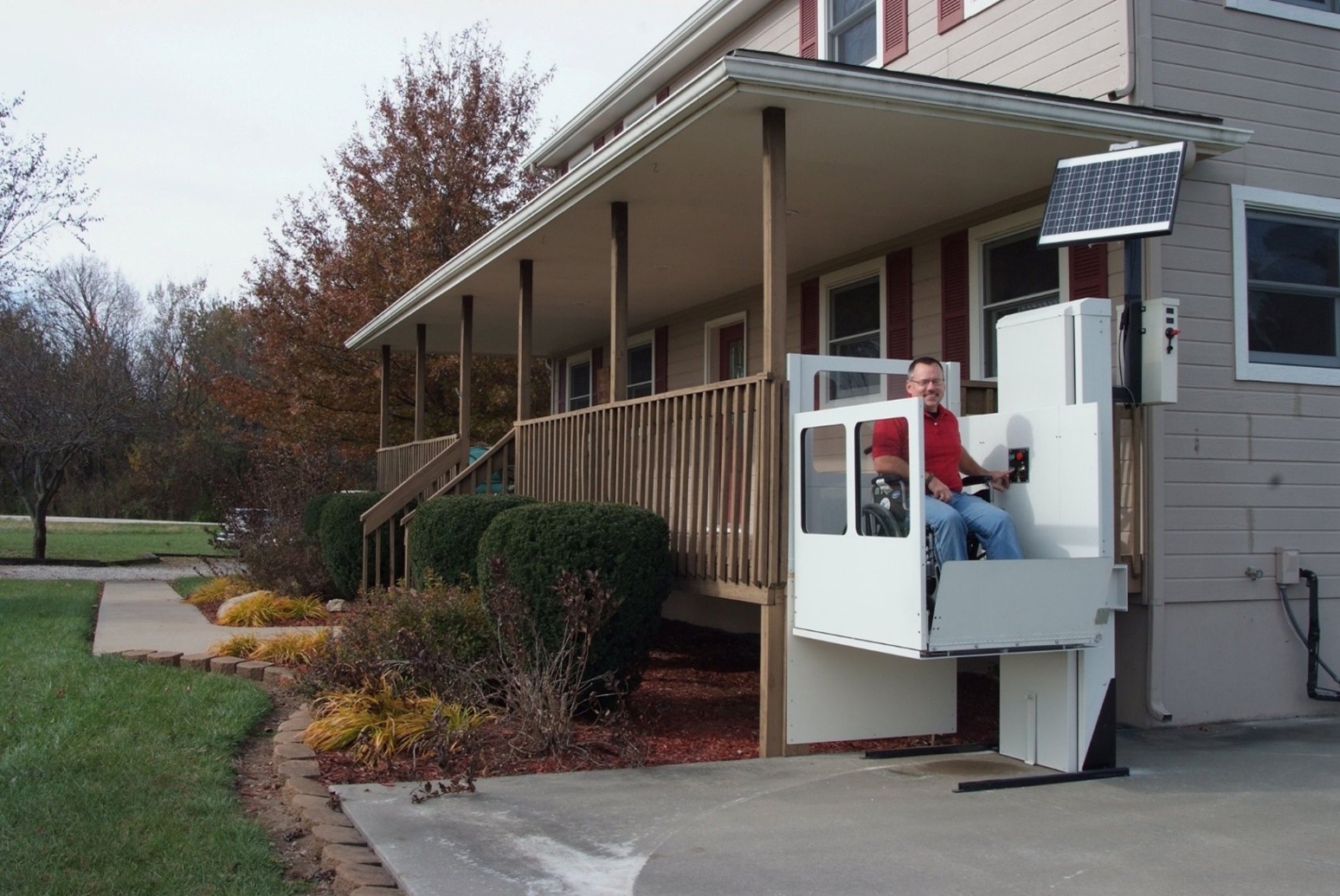
Yes, a wheelchair lift can absolutely be installed at a front entryway. But it isn’t as simple as attaching equipment to steps.
We look at slope. Space. Door swing clearance. Weather exposure. Whether the porch is covered. Whether snow or rain runoff could affect operation.
A properly placed wheelchair lift should feel intentional. Not temporary. Not squeezed into the corner. It should create a stable, direct path from ground level to the entry threshold.
How This Differs From Other Vertical Systems
Some homeowners ask whether a vertical platform lift is the same thing. The terms are often used interchangeably in residential conversations, but the function matters more than the label.
A lift installed at a front entry must handle daily exposure. It must support steady, reliable operation. And it needs to align with how the household actually uses the door.
Others ask about systems like a dumbwaiter. It’s an understandable question. But a dumbwaiter is designed to move items, not people. That distinction is critical. When transporting a person, stability and safety standards are entirely different.
When an Outdoor Lift Makes More Sense Than a Ramp
Ramps are often the first idea homeowners consider. And sometimes, they work.
But ramps require length. And length requires space.
On tighter lots or elevated porches, building a long ramp across the front of the home can dramatically change the appearance. In some cases, it simply isn’t practical.
That’s where an outdoor lift becomes a cleaner solution. It solves the elevation change vertically instead of horizontally. It keeps the footprint smaller. It preserves the existing layout.
A thoughtfully installed wheelchair lift can provide entry access without reworking the entire front yard.

Our Approach to Front Entry Planning
We don’t begin with a product recommendation. We begin with questions.
How often is this entry used?
Is it the primary entrance or secondary?
Does the garage offer an alternative path?
Are there seasonal weather concerns?
Those details guide the decision.
A wheelchair lift at a front entry must feel permanent. It shouldn’t feel like an add-on. We evaluate placement carefully so that the system integrates naturally into the structure.
In waterfront properties, elevation challenges are often more complex. In those cases, homeowners sometimes explore a lake home lift for dock access separately from the front entry solution. When properties vary in grade, layered planning may make sense.
Long-Term Independence Starts at the Door
Entryway access is more than convenience. It’s freedom.
If leaving the house requires assistance, confidence shifts. That’s why front-door solutions often carry emotional weight.
A well-planned wheelchair lift removes hesitation. It makes daily routines predictable again. It restores independence in a way that feels subtle but significant.
Some homeowners initially think about temporary fixes. But when long-term living is the goal, installing a permanent access solution early often prevents repeated upgrades later.
Real Situations We See Frequently
Split-entry homes are common. Even a small flight from driveway to porch can become exhausting.
We’ve also seen historic homes with narrow brick steps where ramps aren’t feasible. In those cases, a vertical solution provides access without permanently altering the facade.
Sometimes families compare a lift to a dumbwaiter for carrying groceries or packages. Again, it’s important to separate item transport from people transport. Systems designed for people must meet entirely different standards.
Clarity makes the decision easier.
Why Homeowners Call Staying Home
Most people don’t call us because they want something new. They call because they want something to work again.
We’ve helped homeowners across the region evaluate entry challenges in real residential settings. Covered porches. Open stoops. Uneven driveways. Weather exposure. Each property presents a different puzzle.
The goal isn’t to overbuild. It’s to make the front door feel simple again.
Common Questions About Installing a Wheelchair Lift at the Front Entry
Can a wheelchair lift handle outdoor weather conditions?
Yes, when properly selected and installed. A wheelchair lift designed for exterior use can operate reliably in changing conditions, provided placement and drainage are considered during planning.
Is a dumbwaiter ever an alternative for front entry access?
No. A dumbwaiter is designed to move objects, not people. It does not meet the safety requirements needed for transporting a person between levels.
How early should entryway access be addressed?
Earlier than most homeowners expect. Planning before mobility becomes urgent allows more flexibility in placement and design.
For homeowners looking to improve access around their property, experience matters. Staying Home has helped families across the region create safer, more usable spaces. Contact us to talk through your needs and learn what mobility options may work best for your home.
Ready to get started? Contact us online, or give us a call at 877-378-4275, and we’ll send you the details.
We are a small company based in Missouri with more than 100 years of combined stairway lift design experience.

Look, we get it. Stairs can get tough. Whether you’re planning ahead or already feeling the strain, adding an elevator to your home might be easier than you think. Ours don’t need a huge remodel or fancy setup. They even run when the power goes out.
No pushy sales stuff. Just honest conversations about what might work for you.
