One of the first questions homeowners ask isn’t about cost. It’s about space.
How much room does a home elevator take? Does it require a massive remodel? Do you need a dedicated shaft from basement to roof? The answers are usually more flexible than people expect.
Space matters. But layout matters more.
Why This Question Comes Up So Early
Most multi-level homes weren’t designed with vertical access in mind. So, when someone starts exploring the idea of a home elevator, they immediately picture losing a closet, shrinking a hallway, or giving up part of a room.
That assumption isn’t always accurate.
At Staying Home, we’ve worked with homeowners in open layouts, tighter split-level homes, and even older structures. The footprint of a system depends heavily on placement and planning.
Before we talk about dimensions, we talk design.
What Is the Actual Footprint of a Home Elevator?
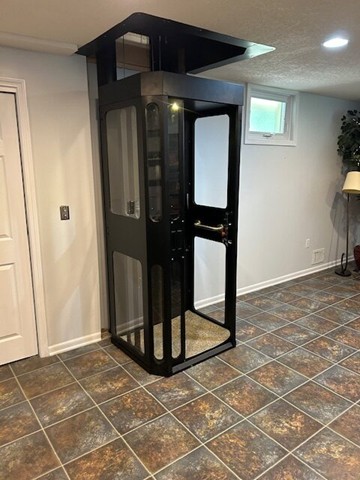
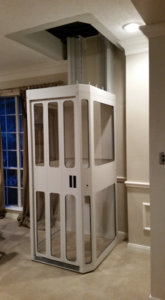
A typical home elevator requires a dedicated vertical path through the levels it serves. That includes space for the cab itself and structural framing around it.
But here’s what surprises people: the required footprint is often smaller than they imagine.
Depending on the configuration, the interior cab can be compact while still providing comfortable access. It doesn’t need to feel industrial. It doesn’t need to dominate the floor plan.
When homeowners compare this to a residential elevator in larger luxury builds, they sometimes assume the space requirements are identical. They aren’t. Residential systems designed for private homes are built with space efficiency in mind.
It’s Not Just About Width and Depth
Square footage is only part of the equation.
Ceiling height. Structural supports. Entry orientation. Door swing. All of these affect planning.
A well-positioned home elevator doesn’t just occupy space—it works with it. Sometimes we align it along an existing wall. Other times it fits near staircases where vertical framing already exists.
The goal isn’t to insert something awkwardly. It’s to integrate it naturally.
Retrofitting vs. New Construction
Space planning looks different depending on whether the home is already built.
In new construction, allocating room for a home elevator can be part of the blueprint. In existing homes, we look at closets, stacked storage areas, or unused corners.
This is where a residential elevator designed for retrofit applications becomes especially useful. It allows vertical access without requiring full-scale reconstruction.
The key is early evaluation. The sooner we assess layout options; the more flexibility exists.
When Interior Space Is Limited
Sometimes homeowners assume there simply isn’t room. That’s when we explore alternatives.
In certain layouts, an outdoor elevator may solve the vertical challenge without affecting interior square footage at all. Exterior placement can preserve indoor flow while still providing full-floor access.
We often review outdoor elevator solutions when the home’s footprint is tight but the property itself allows exterior placement.
As an experienced outdoor elevator company, we evaluate weather exposure, grading, and entry points carefully before recommending an exterior system.
In some properties, homeowners specifically ask about the Outlook outdoor elevator, especially when aesthetics and compact design matter. The important part isn’t the brand. It’s whether the structure supports it.
Real-World Layouts We See
Open-concept homes sometimes provide easier integration than homeowners expect. A home elevator can align along an existing wall without shrinking major living areas.
Split-level homes often allow vertical stacking between garage storage and upper floors.
In older homes, we occasionally use closet stacking—placing the shaft where two or three closets align vertically.
No two homes are identical. That’s why exact measurements come after layout evaluation, not before.
Long-Term Planning Changes How You View Space
When homeowners think about giving up square footage, they focus on what they lose. But long-term access shifts that perspective.
A well-placed home elevator often adds functionality to the entire house. Laundry becomes easier. Guest access improves. Storage on upper levels becomes usable again.
What feels like a trade-off at first can feel like regained independence later.
Why Homeowners Reach Out to Staying Home
Most families call us with one concern: “We don’t think we have room.”
After reviewing the layout, the conversation usually changes. Sometimes the solution is interior. Sometimes exterior. Sometimes it’s a phased plan.
We’ve helped homeowners across the region evaluate vertical access without overbuilding or overcomplicating their homes. The key is understanding the structure first.
Common Questions About Space Requirements for a Home Elevator
Does a home elevator require a large shaft?
Not necessarily. A home elevator can be designed with a compact footprint depending on configuration and structural support. Proper placement often minimizes space impact.
Is a residential elevator larger than other home systems?
A residential elevator designed for private homes is typically built with space efficiency in mind. It is not the same as a large commercial system.
Can exterior placement reduce interior space needs?
Yes. In some cases, exterior installation may preserve interior square footage. Evaluating both interior and exterior options early allows more flexibility.
For homeowners looking to improve access around their property, experience matters. Staying Home has helped families across the region create safer, more usable spaces. Contact us to talk through your needs and learn what mobility options may work best for your home.
Ready to get started? Contact us online, or give us a call at 877-378-4275, and we’ll send you the details.
We are a small company based in Missouri with more than 100 years of combined stairway lift design experience.

Look, we get it. Stairs can get tough. Whether you’re planning ahead or already feeling the strain, adding an elevator to your home might be easier than you think. Ours don’t need a huge remodel or fancy setup. They even run when the power goes out.
No pushy sales stuff. Just honest conversations about what might work for you.
