
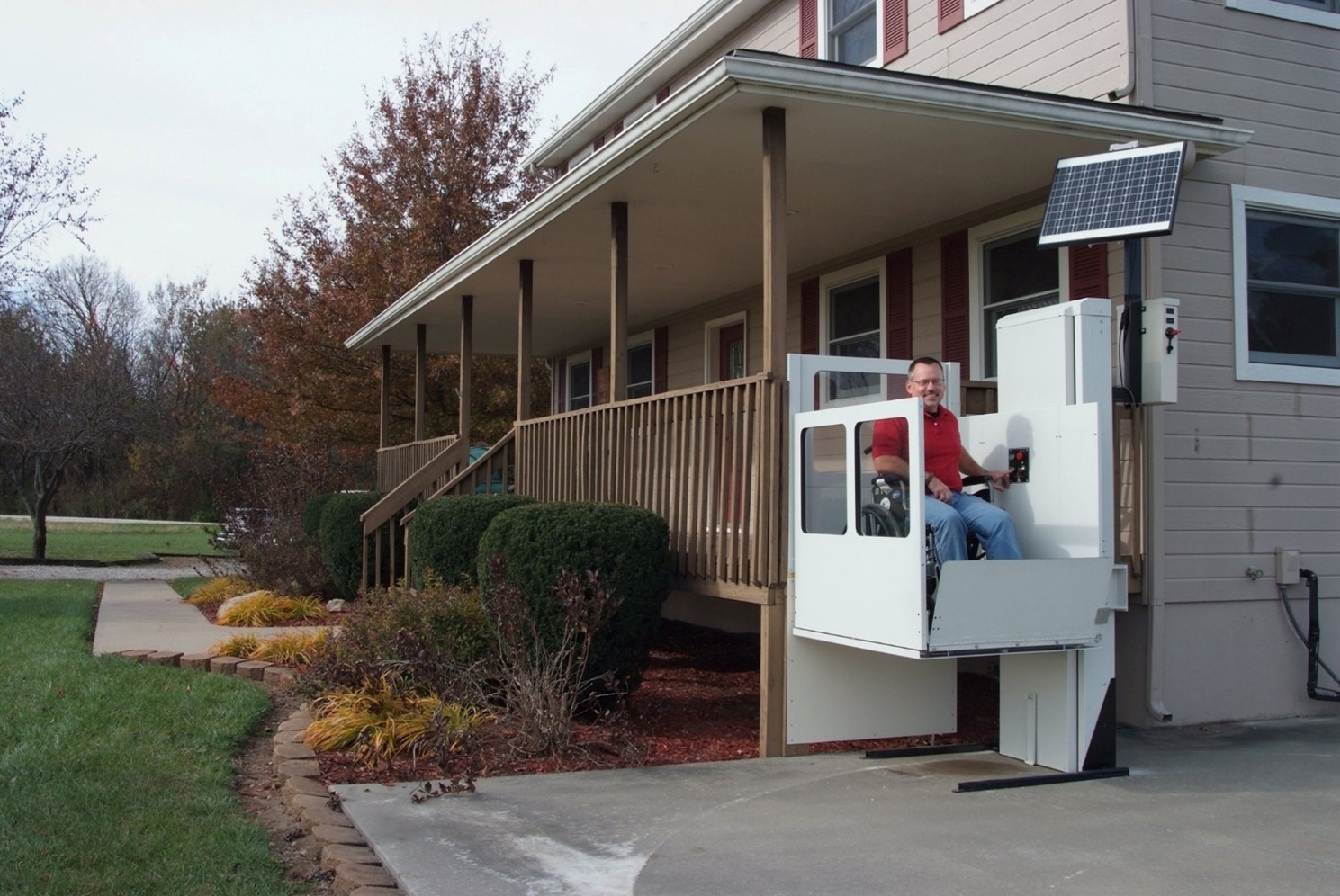
A wheelchair lift for a home entrance is something homeowners usually search for when they hit a very specific problem, getting in and out of the house safely. It sounds like a simple question, but the answer depends heavily on the layout of your home and what kind of access you’re working with.
Some entrances are straightforward. Others take a bit more planning like if you need a lake home lift.
If you’re wondering whether your home qualifies, here’s what actually matters for home lifts.
The short answer: most homes can accommodate a lift
In most cases, yes, a lift can be installed.
But “can it be installed” isn’t the same as “will it be simple.”
Every entrance has its own constraints:
- Height from ground to door
- Available space
- Structural support
- Weather exposure
These factors determine what type of wheelchair lift works best and how involved the installation will be.
Start with the height of your entrance
Height is the first thing installers look at.
A small step or two might only need a short lift or even a different solution.
A higher porch or raised entry changes the approach entirely.
For taller entry points, many homeowners consider a vertical platform lift. These lifts move straight up and are designed specifically for entryway access.
Space around the entrance matters more than you think
Not every doorway has enough room for a lift system.
You need space for:
- The platform itself
- Safe entry and exit
- Clearance for operation
Tight walkways, landscaping, or nearby structures can limit what’s possible.
This is why homeowners comparing residential platform lifts often start with a site evaluation before choosing a model.
Ground conditions and structure
A lift needs a stable base.
That might mean:
- A concrete pad
- Reinforced decking
- Structural support adjustments
Older porches or uneven ground may need prep work before installation.
It’s not a dealbreaker, but it does affect cost and timeline.
Indoor vs outdoor entrances
Where the lift is installed changes the setup.
Outdoor entrances require equipment that can handle weather exposure.
Rain, snow, and temperature swings all play a role.
That’s why many outdoor systems fall under the category of outdoor lift, built with materials designed to hold up over time.
Indoor lifts, on the other hand, are more controlled and may require less protection.
Electrical requirements
Most lifts need a dedicated power source.
In many homes, this is a simple addition. In others, it may require minor electrical upgrades.
It’s usually not a major hurdle, but it’s part of the planning process.
When a lift might not be the best option
Even though most homes can accommodate a lift, there are situations where another solution works better.
For example:
- Extremely tight spaces
- Very low height differences
- Temporary accessibility needs
In those cases, ramps or other modifications may be more practical.
Still, for many homeowners, a wheelchair lift remains the most efficient way to solve the problem without major construction.
Wheelchair lift home entrance and layout challenges for older homes
Older homes often come with tighter layouts and less predictable structures.
Doorways may be narrower. Porches may not be reinforced. Space can be limited.
That doesn’t mean a lift isn’t possible, it just means more planning is involved.
Wheelchair lift home entrance for modern homes
Newer homes tend to be easier to work with.
They often have:
- Cleaner layouts
- Better structural support
- More flexible entry points
This can reduce installation time and cost.
Wheelchair lift home entrance and long-term use
If the lift will be used daily, placement matters.
You want:
- Convenient access
- Safe entry and exit
- Minimal disruption to daily routines
Thinking about how the lift fits into everyday life helps ensure it actually improves accessibility, not just technically solves it.
Cost considerations
Costs vary based on:
- Lift type
- Installation complexity
- Site preparation
- Electrical work
Simple installs may stay on the lower end. More complex setups can increase the total.
The key is understanding what your specific entrance requires before making decisions.
What the installation process looks like
Most installations follow a similar path:
- Site evaluation
- Equipment selection
- Preparation work
- Installation
- Final inspection
Once everything is ready, the actual install is usually quick.
The planning phase is where most of the time is spent.
Final thoughts on wheelchair lift home entrance
A wheelchair lift at the home’s entrance is possible for most residences, but the details matter.
Height, space, structure, and usage all play a role in what works best.
The good news is that there’s almost always a solution. The key is finding the one that fits your home without creating new challenges.
FAQs
Can a wheelchair lift be installed on stairs?
Yes, but that’s typically a different type of system, like a stairlift. Platform lifts are usually installed alongside stairs or at entry points rather than directly on them.
How much space is needed for a wheelchair lift?
It depends on the model, but most require enough room for the platform plus safe clearance around it. A site evaluation will give exact measurements.
Do wheelchair lifts work during power outages?
Some models include battery backup systems that allow limited use during outages. It’s something to ask about when choosing a lift.

Ready to get started? Reach out to our Staying Home team online or give us a call at 877-378-4275 for more details. We are a small company based in Missouri, and we’ve helped a lot of folks stay comfortable in the homes they love. We also install home lifts for disabled individuals.
Look, we get it. Stairs can get tough. Whether you’re planning ahead or already feeling the strain, adding an elevator to your home might be easier than you think. Ours don’t need a huge remodel or fancy setup. They even run when the power goes out.
No pushy sales stuff. Just honest conversations about what might work for you.
