
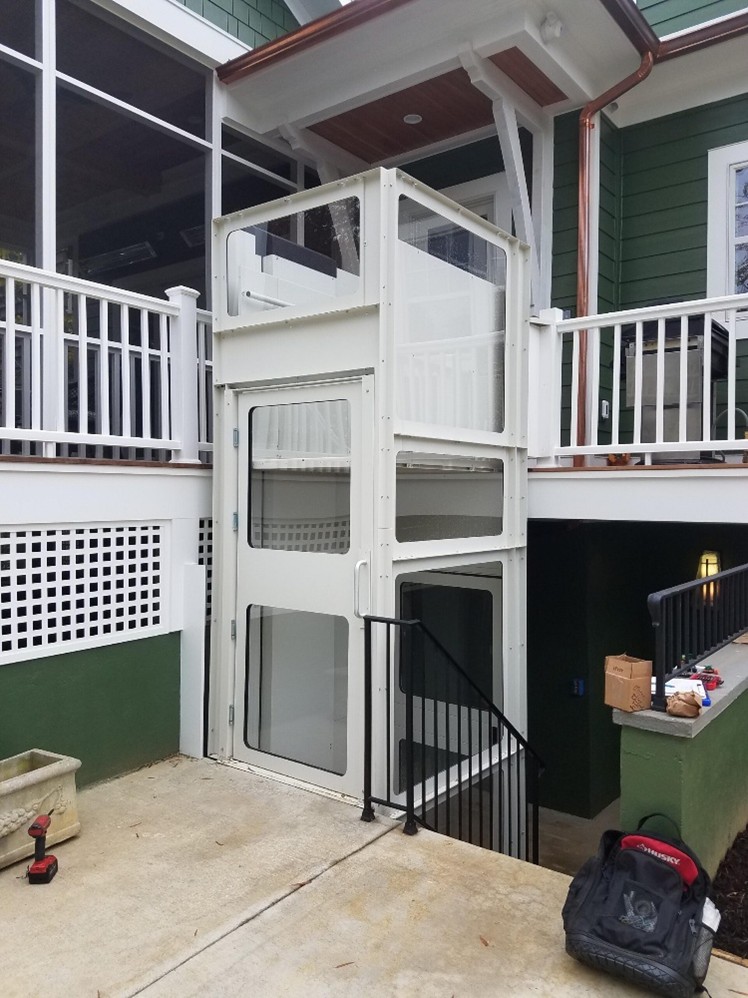
The vertical platform lift vs ramp decision is something most homeowners don’t think about until access becomes a real issue. Maybe it’s a wheelchair. Maybe it’s balance. Maybe stairs just aren’t as manageable as they used to be. Whatever the reason, the goal is the same, get in and out of your home safely without turning it into a daily struggle with home lifts for the elderly or disabled.
Both ramps and vertical platform lifts solve that problem. But they do it in very different ways, and those differences like using an outdoor lift matter more than most people expect.
The biggest difference is how they use space
A ramp stretches outward. A lift goes straight up.
That one detail changes everything.
Ramps follow a gradual slope. To make them safe, they need length. A lot of it. A small rise at your front door can turn into a long structure wrapping across your yard or along your home.
A vertical platform lift doesn’t need that. It stays compact and moves vertically, making it easier to fit into tighter spaces.
For many homeowners, the vertical platform lift vs ramp choice comes down to whether they even have enough room for a ramp in the first place.
How much room does a ramp actually take?
This is where expectations and reality don’t always match.
A standard guideline is one foot of ramp for every inch of rise. That means a 24-inch porch could require around 24 feet of ramp.
Now picture that wrapping around your home or cutting across your yard.
That’s why people exploring residential platform lifts often rethink ramps once they see the space requirements in real terms.
When a ramp makes sense
Ramps still have their place.
They work well when:
- There’s plenty of outdoor space
- The height is relatively low
- You want something simple with no moving parts
- Budget is limited
There’s no electricity involved. No buttons. No mechanical components. You just roll or walk up and down.
That simplicity is appealing for some homeowners.
When a vertical platform lift makes more sense
A lift is usually the better option when space is tight or height becomes a challenge.
They’re often installed for:
- Taller porches
- Garage entry steps
- Side entrances with limited clearance
- Indoor level changes
Instead of building outward, the lift stays compact and moves vertically.
Homeowners that are comparing home lifts for disabled individuals often make this purchase once they realize how much space a ramp would require.
Cost comparison isn’t always what you expect
At first glance, ramps seem like the cheaper option.
Sometimes they are. But not always.
Short ramps are relatively affordable. Long ramps, especially those with turns, railings, and landings, can add up quickly.
A vertical platform lift has a higher upfront cost, but the pricing is more predictable.
That’s why the vertical platform lift vs ramp decision isn’t just about choosing the lower number. It’s about comparing the full project.
Daily use feels very different
This is where things get personal.
Using a ramp takes effort. The longer the ramp, the more effort it requires, especially for wheelchair users or caregivers.
A lift removes that effort. You press a button and it does the work.
For occasional use, a ramp might be fine. For daily use, especially multiple times a day, a lift often feels more manageable.
It’s one of the reasons many homeowners who install a wheelchair lift say it changes their routine immediately.
Weather plays a bigger role than people expect
Outdoor ramps deal with everything, rain, snow, ice, heat.
That affects traction and safety. Maintenance becomes part of the routine.
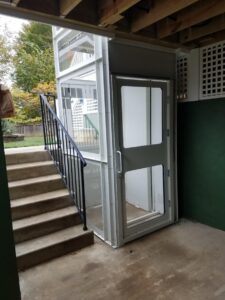
Lifts are also exposed if installed outside, but many are designed with weather-resistant materials or optional enclosures.
Neither option is maintenance-free. The difference is how that maintenance shows up.
Visual impact on your home
A ramp changes how your home looks.
It can take up a large portion of your exterior, especially if it needs to wrap around to meet length requirements.
Some homeowners don’t mind that. Others want something less noticeable.
A lift is more compact. It’s still visible, but it doesn’t dominate the same amount of space.
In tighter neighborhoods, that difference can matter.
Installation timelines
Ramps are often quicker to install, depending on size and design.
Lifts require more coordination, electrical setup, permits, and installation, but they’re still relatively fast compared to larger accessibility projects.
Neither option involves major structural changes like an elevator would.
Vertical Platform Lift vs ramp and aging at home
Needs tend to change over time.
What works today may not feel practical later.
A ramp might be manageable now, but longer distances can become harder. A lift keeps the effort consistent regardless of mobility changes.
That’s why homeowners planning for long-term living often consider lifts earlier than expected.
Vertical platform lift vs ramp and property limitations
Some homes simply don’t have the space for a ramp.
Tight lots, landscaping, or elevation changes can limit options.
In those cases, the vertical platform lift vs ramp choice becomes straightforward, a lift is often the only realistic solution.
Vertical Platform Lift vs ramp for everyday convenience
If you’re using it once in a while, either option can work.
If you’re using it multiple times a day, convenience matters more.
A ramp is always available but requires physical effort.
A lift requires power but removes strain.
That trade-off is usually what tips the decision one way or the other.
Final thoughts on vertical platform lift vs ramp
The vertical platform lift vs ramp decision isn’t about which option is better overall. It’s about what fits your home and your daily life.
If you have space and want something simple, a ramp can work well.
If space is limited, or you want something that reduces effort, a vertical platform lift is often the better choice.
Both solve the same problem. The difference is how they fit into your routine.
FAQs
Is a ramp safer than a vertical platform lift?
Both are safe when installed correctly. Ramps depend on proper slope and traction. Lifts rely on mechanical safety features and regular maintenance.
Can a vertical platform lift be used without a wheelchair?
Yes. Many people use them for general mobility support, not just wheelchair access.
Do ramps require permits?
Sometimes they do. It depends on local building codes and the size of the structure. Lifts also typically require permits, especially for electrical work.

Ready to get started? Reach out to our Staying Home team online or give us a call at 877-378-4275 for more details. We are a small company based in Missouri, and we’ve helped a lot of folks stay comfortable in the homes they love.
Look, we get it. Stairs can get tough. Whether you’re planning ahead or already feeling the strain, adding an elevator to your home might be easier than you think. Ours don’t need a huge remodel or fancy setup. They even run when the power goes out.
No pushy sales stuff. Just honest conversations about what might work for you.
