Midwest weather can change fast. A dry morning can turn into rain, wind, or freezing temperatures by evening. That makes a lot of homeowners ask the same thing: can an outdoor lift really keep working through all of that? It can, but only when it’s built for exterior use and installed in the right place.
Why Weather Matters So Much
Exterior access must deal with real conditions, not showroom conditions. Rain, snow, humidity, and temperature swings all affect how a system performs over time.
That matters most at the exact point where people need safe access. Front steps get slick. Garage entries freeze. Water collects where it should not. In the Midwest, a small elevation change can become a real daily problem when the weather shifts.
That’s where a properly installed outdoor lift becomes more than a convenience. It becomes part of making the home safer to use year-round.
How an Outdoor Lift Handles Exterior Conditions
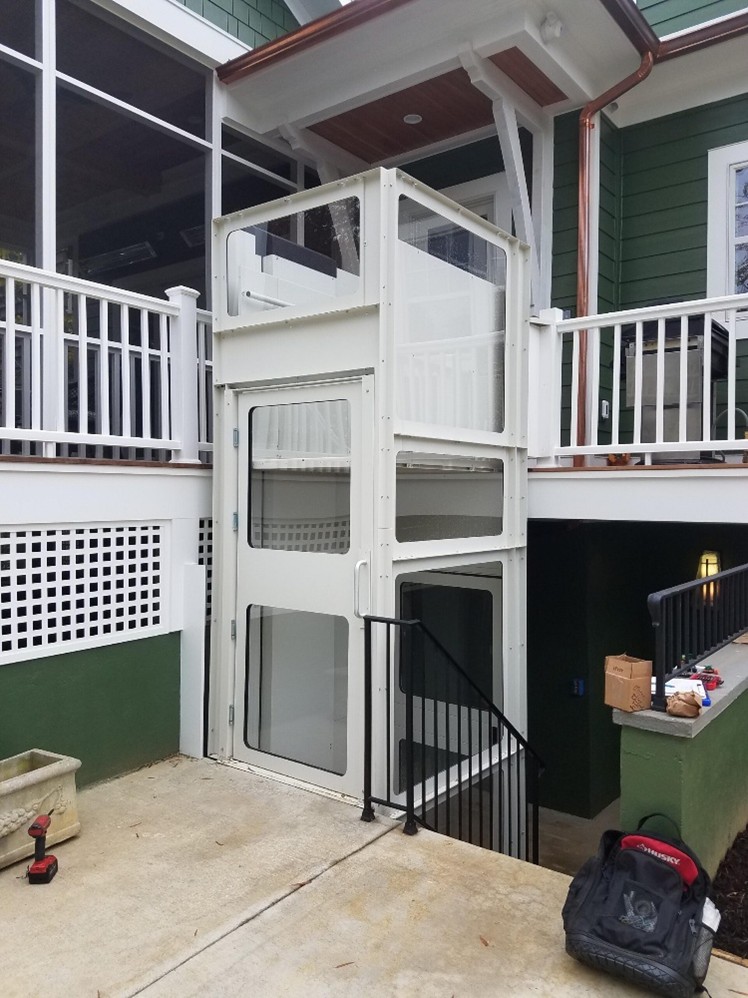
An outdoor lift designed for residential use is made for exposure. It is not just an indoor system placed outside and expected to survive.
Materials, platform stability, and protected components all matter. The goal is to be steady in changing weather, not just occasional operation when conditions are perfect.
Some homeowners compare this to a vertical platform lift during research. In many homes, that is exactly the kind of system being used. The difference is that exterior placement requires more attention to the environment around it.
Placement Changes Everything
A lift can be well built and still underperform if it is placed poorly.
We always look at things like:
- Where water moves around the entry
- Whether the area is covered
- How snow tends to collect
- How often the entry is used
Those details affect long-term performance more than most people expect.
A well-placed outdoor lift reduces unnecessary exposure and avoids drainage trouble. It should feel like part of the home, not like a piece of equipment that was forced into the wrong spot.
Why Some Homeowners Choose This Over a Ramp
Ramps are often the first thing people think about. And sometimes they make sense.
But ramps need length. On tighter lots, that can take up a surprising amount of space. In bad weather, a long surface can also become harder to navigate safely.
A vertical platform lift solves the same elevation change without stretching across the yard. It goes up instead of out, which often makes more sense in homes where space is limited, or the entry sits close to the driveway.
Some people also search for a wheelchair lift when they’re looking into exterior access. In residential settings, that often points to the same kind of vertical system. What matters is whether it is designed for outdoor use and regular daily operation.
Sloped and Waterfront Properties Need More Planning
Some homes are simple. Others are not.
On steep lots or waterfront properties, one system may not solve every access problem. We’ve worked with homeowners who used a lake home lift for dock access while also planning a separate solution for the main entry.
That kind of layered planning is common. The key is making sure each system is designed for the exact challenge it is solving.
Why a Dumbwaiter Is Not the Answer
This comes up more often than you might expect.
A dumbwaiter is built to move objects. It is not built to transport people safely. The safety requirements are different, and the operating conditions are different too.
When homeowners are dealing with weather, entry access, and personal safety, the system must be designed for people from the start.
How We Evaluate Outdoor Conditions
We do not start with a brochure. We start with the property.
We look at grading, exposure, drainage, and how entry is used in daily life. As an experienced outdoor elevator company, we also look at how the structure itself supports long-term performance.
That part matters. A good system is not just weather-resistant. It is installed where weather has the least impact.
What Homeowners Usually Notice After Installation
When the setup is right, homeowners tend to notice the same things:
- Access feels more predictable
- Bad weather causes less disruption
- The property layout still feels intact
- Daily routines become easier again
The goal is not to add something bulky or dramatic. It is to remove a barrier that keeps showing up every time the weather changes.
Why Homeowners Choose Staying Home
Most homeowners reach out because something simple has slowly become harder. They are not looking for overbuilt answers. They are looking for something that works.
We’ve helped families across Missouri evaluate exterior access in real conditions, with more than 100 years of combined stairway lift design experience. That keeps the conversation grounded in what holds up here, not what only looks good on paper.
Common Questions About Getting an Outdoor Lift
Can an outdoor lift handle snow and rain?
Yes, when it is designed for exterior use and installed with drainage, exposure, and placement in mind.
Is a vertical platform lift a good outdoor option?
A vertical platform lift can work very well outdoors when the property layout supports it and the system is chosen for exterior conditions.
How does a wheelchair lift fit into this?
A wheelchair lift used outside needs to be built for weather exposure and steady operation, not just occasional use.
Ready to get started? Contact us online, or give us a call at 877-378-4275, and we’ll send you the details.
We are a small company based in Missouri with more than 100 years of combined stairway lift design experience.

Look, we get it. Stairs can get tough. Whether you’re planning ahead or already feeling the strain, adding an elevator to your home might be easier than you think. Ours don’t need a huge remodel or fancy setup. They even run when the power goes out.
No pushy sales stuff. Just honest conversations about what might work for you.
