
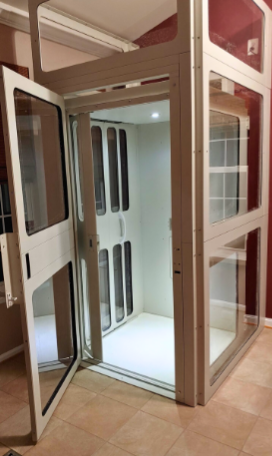
If you’ve looked into adding a residential elevator, you’ve probably wondered how much space it actually takes. For a lot of people, that’s the question that determines whether they keep researching or move on. The layout of the home often matters more than people expect.
It Usually Starts With One Assumption
We’ve noticed something over the years. Most people think they’ve already ruled themselves out. They’ll say their house is too small, or they’ll point to a hallway and tell us there’s simply nowhere an elevator could go. By the time we walk through the home together, the conversation often changes. Not because the house got bigger. Because we found possibilities that weren’t obvious at first. That’s one reason we try not to answer the space question before seeing the home. Two houses with similar square footage can lead to completely different recommendations.
The Floor Plan Often Has the Final Say
People naturally focus on dimensions. How many feet? How much width? Will a closet have to disappear? Those are good questions, but they aren’t usually the ones that decide whether an elevator can be installed. We’ve walked through homes where the available space looked limited on paper, yet the layout made the project surprisingly practical. We’ve also seen large homes where the best location wasn’t immediately obvious because of the way the rooms connected.
A residential elevator isn’t chosen by size alone. Where the elevator travels, how each floor is used, and how the home is built all become part of the decision. Sometimes the answer is exactly what the homeowner expected. Sometimes it isn’t even close.
We Spend More Time Asking Questions Than Taking Measurements
People are sometimes surprised by the first part of the consultation. We don’t immediately start measuring walls. Instead, we start asking about everyday life. Which staircase gets used the most? Do you carry laundry between floors every week? Are groceries coming through the garage? Does everyone sleep upstairs? We’ve walked through enough homes to know a floor plan only tells part of the story.
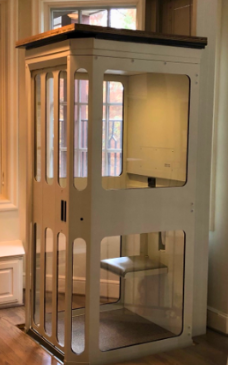
Once we understand how someone moves through the house, it’s much easier to see where an elevator could fit naturally. The goal isn’t to force one into an empty corner. It’s to find a location that makes everyday life simpler without changing the character of the home. That’s also why there isn’t one design that fits every project. In some situations, a shaftless home elevator makes excellent use of limited space. In another home, a different style may be the better long-term choice.
Most Homeowners Aren’t Really Asking About Space
It’s interesting what happens after those first few questions. Someone begins by asking how much room an elevator needs. Ten minutes later, they’re talking about carrying holiday decorations downstairs. Or helping a parent continue visiting the upstairs bedrooms. Or avoiding another trip up the stairs after forgetting a phone charger. That’s usually when we realize the discussion isn’t really about square footage anymore. It’s about making everyday routines easier. Over time, we’ve learned that good accessibility solutions for homes should solve the little frustrations people deal with every day, not simply fit inside a certain amount of space.
Planning Usually Creates More Options
One thing we hear quite a bit is, “We don’t need this yet.” That may be true. But many homeowners aren’t making decisions only for today. They’re thinking about the next ten or fifteen years. Maybe they love their neighborhood. Maybe they’ve recently remodeled. Maybe moving simply isn’t something they want to consider.
Planning for aging in place often starts while stairs are still manageable. Waiting until they’re a daily obstacle can sometimes limit the choices available. We’ve also met homeowners whose biggest challenge wasn’t inside the house at all. For properties with steep grades or multiple exterior levels, an outdoor elevator may provide the better solution.
Why Homeowners Turn to Staying Home
We’ve spent years helping families find practical ways to remain comfortable in the homes they already love. Our products are proudly made in the USA, but just as important is taking the time to understand each homeowner’s goals before recommending a solution. We don’t believe someone should have to become an expert on elevators before asking questions.
Choosing the right residential elevator starts with looking at the way you use your home today and how you’d like it to support you in the years ahead. Whether someone is exploring a home elevator during new construction or looking for ways to improve an existing home, we’ve found that the best projects almost always begin with a conversation instead of a blueprint.
Frequently Asked Questions
Is the amount of space the same for every elevator?
No. Different systems are designed for different situations, so the required space varies from one installation to another.
Do I need to know which model I want before meeting with a dealer?
Not at all. Most homeowners are simply looking for guidance. Understanding the home comes before recommending a specific system.
Is it better to install an elevator during new construction?
Planning ahead can create additional flexibility, but many people choose to add an elevator years after moving into their home.
Let’s Talk About What’s Possible
The amount of space needed for a residential elevator depends on much more than measurements. The way your home is designed and how you use it every day often play a much bigger role than people expect. If you’ve been wondering whether your home has enough room, Staying Home is here to help. We’d be happy to answer your questions, look at your home’s layout, and help you understand which options may be the best fit for the years ahead.

Ready to get started? Reach out to our Staying Home team online or give us a call at 877-378-4275 for more details. We are a small company based in Missouri, and we’ve helped a lot of folks stay comfortable in the homes they love.
Look, we get it. Stairs can get tough. Whether you’re planning ahead or already feeling the strain, adding an elevator to your home might be easier than you think. Ours don’t need a huge remodel or fancy setup. They even run when the power goes out.
No pushy sales stuff. Just honest conversations about what might work for you.
