Not every access challenge requires the same solution. Some homes need full-floor travel. Others just need to overcome a few steps. That distinction matters more than most people realize.
In many cases, a vertical platform lift becomes the right alternative when larger systems feel unnecessary — or when remodeling simply doesn’t make sense.
Why Choosing the Right Lift Matters
Home accessibility decisions aren’t just technical. They affect how the house feels every day. Too small of a solution can create limitations. And going too large can feel excessive.
We’ve seen homeowners initially assume they need a full elevator system, only to realize their actual challenge is a short elevation change at an entryway or between split levels. In those situations, a vertical platform lift often fits better.
It solves the barrier directly — without reshaping the entire home.
What a Vertical Platform Lift Actually Does
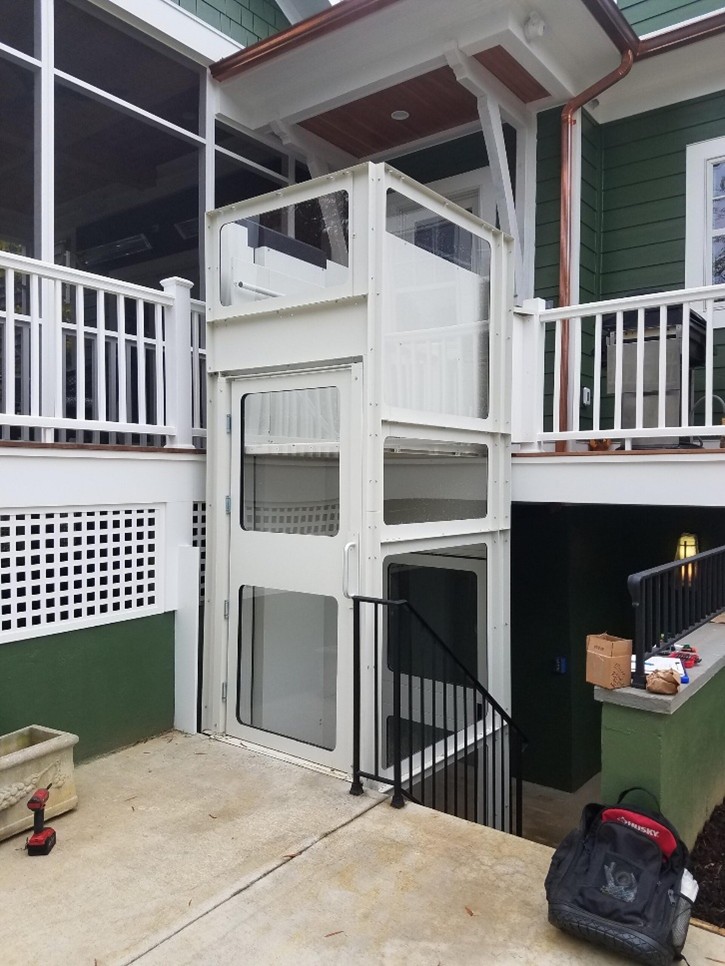
A vertical platform lift moves straight up and down on a stable platform. No staircase rail. No long ramp stretching across the yard. Just a controlled vertical path between two levels.
It’s commonly used for:
- Raised porches
- Garage-to-entry transitions
- Split-level interiors
- Short interior elevation shifts
Some homeowners use the term wheelchair lift during their research. In residential settings, the phrases often overlap in conversation. What matters more is how the system is designed and where it will be installed.
A lift designed for people must prioritize stability, controlled movement, and daily reliability.
When It Makes More Sense Than a Larger System
If your home has three full stories, a full elevator system may be appropriate.
But if the issue is four steps at the front entry? Or a short rise between the garage and the kitchen? A vertical platform lift often becomes the cleaner option.
It avoids:
- Structural shafts
- Large interior framing changes
- Major floorplan disruption
In many homes, it sits beside existing stairs without altering the core layout. That simplicity is often what makes it the better long-term decision.
How It Compares to Other Vertical Options
Some homeowners compare a vertical platform lift to a traditional wheelchair lift installed on a staircase rail. Rail-based systems depend on the staircase itself. Platform systems create their own direct vertical path. That independence changes how the home functions.
We also occasionally hear questions about whether a dumbwaiter could handle certain level changes. It’s understandable — both move vertically. But the difference is critical. A dumbwaiter transports objects. A lift built for people must meet completely different safety and structural standards. That distinction isn’t minor. It’s fundamental.
When an Outdoor Lift Is the Better Alternative
Many elevation barriers happen outside. Front steps. Back patios. Waterfront entries. In those cases, an outdoor lift may provide access without touching interior square footage at all. Compared to constructing a long ramp, it often preserves yard space and keeps the home’s exterior cleaner.
Some homeowners assume the only exterior vertical solution is a full outdoor elevator. But that’s not always necessary. For short vertical rises, a platform system can solve the challenge efficiently.
In waterfront properties, elevation shifts are often more dramatic. We’ve worked with homeowners who installed a lake home lift at dock level while using a platform system at the primary entry. Layered solutions aren’t uncommon — they just need to be intentional.
Our Approach to Evaluating the Home
We don’t begin with product recommendations. We begin with movement patterns. Where do you enter most often? How many steps create friction? Is the need immediate — or long-term planning?
When we recommend a vertical platform lift, it’s because the layout supports it. Not because it’s the simplest item on a list.
We also look ahead. Will mobility needs increase? Will multiple people rely on it? Planning beyond the present moment usually clarifies the decision.
Why Smaller Solutions Often Work Better
There’s a common belief that accessibility upgrades must be dramatic to be effective. That’s rarely true. In many homes, a small vertical change creates the biggest daily frustration. Solving that specific barrier with a vertical platform lift can restore independence without turning the house into a construction project.
It’s not about installing the biggest system available. It’s about installing the right one.
Real Homes, Real Situations
We’ve seen:
- Split-entry homes where three garage steps created daily strain
- Covered porches where ramps would have dominated the facade
- Tight lot lines where horizontal solutions weren’t feasible
In those cases, a vertical platform lift addressed the elevation directly and quietly. It didn’t redraw the floor plan. It simply removed the barrier.
Why Homeowners Call Staying Home
Most families don’t reach out because they want something new. They reach out because something has slowly become harder.
We’ve helped homeowners across Missouri evaluate lift options with clarity — without pushing oversized solutions or unnecessary remodeling.
With more than 100 years of combined stairway lift design experience, our focus remains simple: make the home work the way it used to. Sometimes that means a larger system. Often, it means choosing the right alternative.
Common Questions About Vertical Platform Lifts
When is a vertical platform lift better than a wheelchair lift?
A vertical platform lift often makes more sense when a direct vertical path is needed rather than a rail attached to stairs. It creates independent access without relying on the staircase structure.
Is an outdoor lift reliable in changing weather?
Yes. An outdoor lift designed for residential conditions can operate reliably when properly installed and positioned. Drainage and exposure are evaluated during planning.
Could a dumbwaiter replace a lift for short elevation changes?
No. A dumbwaiter is designed to transport objects, not people. Systems built for individuals must meet entirely different safety standards.
Ready to get started? Contact us online, or give us a call at 877-378-4275, and we’ll send you the details.
We are a small company based in Missouri with more than 100 years of combined stairway lift design experience.

Look, we get it. Stairs can get tough. Whether you’re planning ahead or already feeling the strain, adding an elevator to your home might be easier than you think. Ours don’t need a huge remodel or fancy setup. They even run when the power goes out.
No pushy sales stuff. Just honest conversations about what might work for you.
