When people begin looking for a better way to navigate steps, they often assume a ramp is the only answer. In many situations, though, a wheelchair lift provides a more practical solution by improving access without requiring the amount of space a ramp often needs.
The Best Choice Depends on More Than the Steps
One of the first questions people ask is surprisingly simple. “Should we install a ramp?” Sometimes the answer is yes. Other times, solving one problem with a ramp creates a different challenge somewhere else on the property. We’ve visited homes where the elevation change looked small from the driveway but required a very long ramp to meet safety guidelines. In other cases, adding a ramp would have taken up much of the front yard, blocked a walkway, or changed how the entrance was used every day.
That’s usually when homeowners realize there may be another option worth considering. At Staying Home, we don’t begin by recommending equipment. We start by understanding how people use their home today and what they want everyday access to look like in the future.
Space Often Becomes the Deciding Factor
It’s easy to underestimate how much room a properly designed ramp can require. A few steps at the front door may not seem significant until you calculate the distance needed for a gradual, comfortable slope. On some properties, there’s plenty of room. On others, there simply isn’t. That’s usually the point where homeowners realize a wheelchair lift may fit the property better.
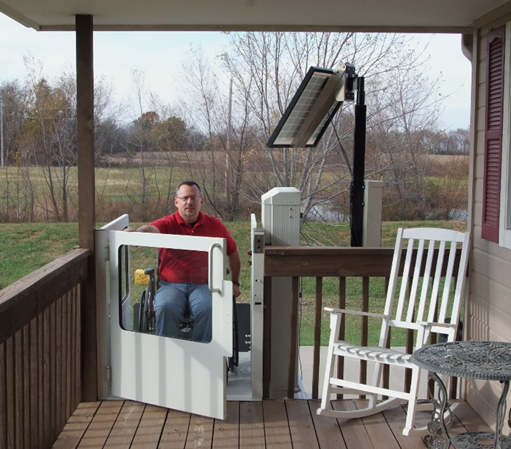
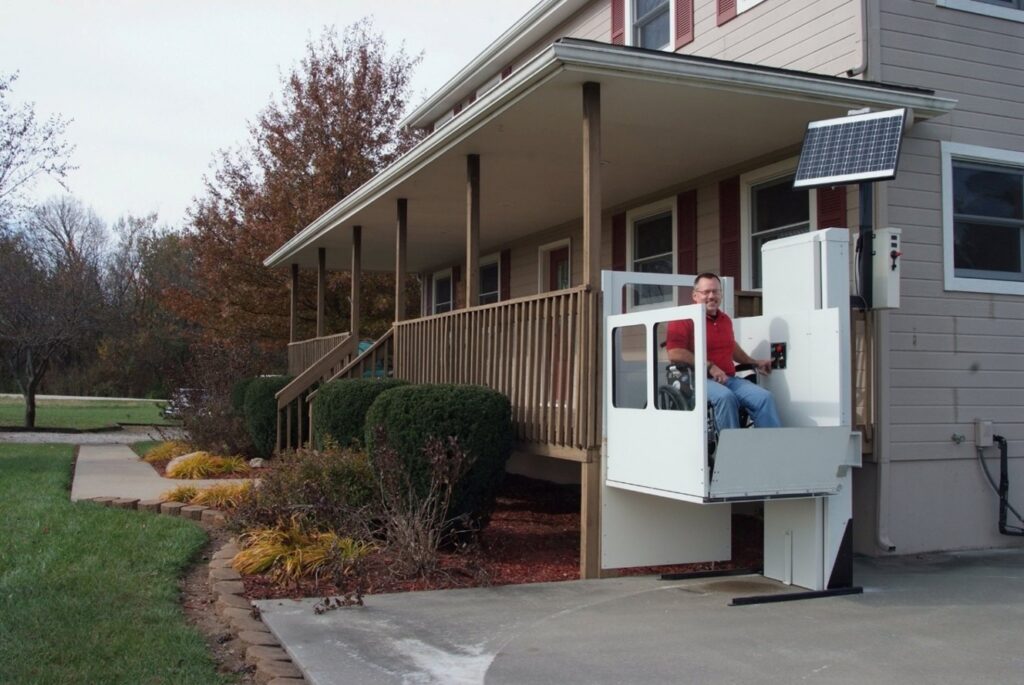
Instead of extending across a yard or wrapping around a porch, the lift travels vertically between two levels while using much less space. Many people first hear the term vertical platform lift, but whatever it’s called, the goal remains the same: making entry and exit safer without dramatically changing the home’s layout.
Every Property Creates Different Opportunities
Some homes sit close to the street with very little room for a ramp. Others have landscaping, retaining walls, or driveways that leave few practical installation options. We’ve also worked with homeowners whose favorite entrance wasn’t the front door at all. For them, improving access through the garage or a side entrance made everyday routines much easier. That’s why we spend time walking the property before talking about products.
Understanding how someone actually moves through the home often tells us much more. For many families, one of our residential platform lifts ends up fitting the property better than they expected because it works with the space instead of asking the space to change.
Daily Life Matters More Than a Floor Plan
Two homes can have nearly identical layouts and still end up with different recommendations. One homeowner may enjoy gardening and use the back entrance several times a day. Another may rely almost entirely on the front porch because that’s where visitors arrive, and packages are delivered. Those routines influence the decision just as much as the home’s design. Sometimes the simplest solution isn’t the one people expected when they first called us. It’s the one that quietly makes everyday routines feel easier after it’s installed.
Planning for Tomorrow Can Open More Possibilities
Not everyone exploring accessibility options needs immediate assistance. Not everyone exploring accessibility options needs immediate assistance. Some families are planning while they still have time to compare different approaches. They may begin by researching home lifts for elderly and asking which options will make the most sense for the years ahead.
Other homeowners are looking into home lifts for disabled family members whose mobility needs have changed or may continue changing over time. Planning before decisions become urgent often creates more flexibility and more confidence.
Why Staying Home Takes This Approach
Helping people stay in the homes they love has always been our mission. Our products are proudly manufactured in the United States and designed for dependable, everyday use. More importantly, we believe every recommendation should fit the homeowner instead of following a one-size-fits-all approach. Some people ultimately choose a ramp. Others discover that a wheelchair lift solves the challenge with less impact on their property and everyday routine.
Depending on the property, an outdoor lift may provide reliable access to porches, decks, or garage entrances where a traditional ramp would be difficult to install. Our job isn’t to steer people toward one answer. It’s to help them understand the options so they can make a decision that feels right for both their home and their future.
Frequently Asked Questions
How do I know if a wheelchair lift is right for my home?
A walkthrough can help determine whether a lift or a ramp better fits your property’s layout, elevation changes, and daily routine.
Can wheelchair lifts be installed outdoors?
Yes. Many lifts are specifically designed for exterior locations such as front porches, garages, decks, and other outdoor entry points.
Do lifts require less space than ramps?
In many situations, yes. Because the platform travels vertically, lifts can often provide accessibility where a full-length ramp would be difficult to accommodate.
The Right Solution Starts With Looking at the Whole Property
The best wheelchair lift isn’t chosen because it’s newer than a ramp or because it has more features. It’s chosen because it fits the way you use your home and the space you have available. If you’re exploring accessibility options, Staying Home can help you compare solutions, answer your questions, and recommend an approach that’s designed around your property, your routine, and your long-term goals.

Ready to get started? Reach out to our Staying Home team online or give us a call at 877-378-4275 for more details. We are a small company based in Missouri, and we’ve helped a lot of folks stay comfortable in the homes they love.
Look, we get it. Stairs can get tough. Whether you’re planning ahead or already feeling the strain, adding an elevator to your home might be easier than you think. Ours don’t need a huge remodel or fancy setup. They even run when the power goes out.
No pushy sales stuff. Just honest conversations about what might work for you.
