Most people don’t wake up one day planning to install a lift. The conversation usually starts small. A few steps feel steeper than they used to. A garage entry becomes frustrating. A porch suddenly feels higher.
That’s when questions start coming up about whether a wheelchair lift is the right move — and what installing one actually involves.
How Do I Know If a Wheelchair Lift Is the Right Solution?
This is almost always the first question.
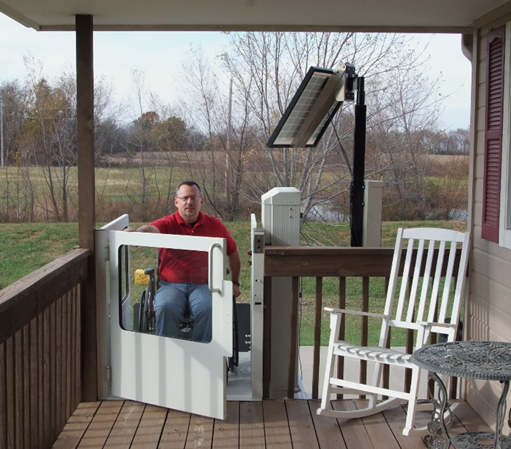
A wheelchair lift makes sense when the primary barrier is a short vertical rise — not full-floor travel. Think front steps, split-level transitions, or raised garage entries.
If the goal is to move between three complete stories, that’s a different conversation. But when the issue is four or five steps that interrupt daily routines, a lift designed for people can solve the problem directly.
We always start with the layout. Not the equipment. Where is the barrier? How often is that entrance used? Is this short-term recovery — or long-term planning? Those answers shape everything.
Can It Be Installed at the Front Entry?
Yes — in many cases, absolutely.
A wheelchair lift can be placed at a front porch, garage threshold, or patio entry. What matters most is grading, available space, and weather exposure.
Some homeowners initially assume a ramp is their only option. But ramps require length. And length requires yard space. On tighter lots, a vertical solution can feel cleaner and more contained.
That’s where an outdoor lift often becomes the practical alternative. Instead of stretching across the front of the home, it rises vertically and preserves the existing footprint.
Will It Change the Look of My Home?
This concern comes up often — and it’s valid. No one wants their home to feel institutional. A well-placed wheelchair lift should feel intentional. It shouldn’t look temporary or squeezed into a corner. Placement matters. So does scale.
We’ve seen situations where homeowners assumed they needed a large outdoor elevator, only to realize their elevation change was small enough for a more compact solution. When the system matches the layout, it blends in far more naturally than most people expect.
How Is It Different From a Dumbwaiter?
This question surprises some people, but we hear it regularly. A dumbwaiter moves objects. Groceries. Laundry. Storage items. It is not designed for transporting people.
A wheelchair lift must meet entirely different safety standards. Stability, guard panels, weight capacity, emergency controls — these aren’t optional features. They’re built-in necessities. It’s an important distinction.
What About Waterfront or Elevated Properties?
Elevation changes are often more dramatic in waterfront homes.
In those settings, we sometimes see homeowners install a lake home lift at dock level while addressing entry access separately at the main residence.
A lake home lift is designed specifically for managing grade differences between water access and living areas. It’s not uncommon for properties to require layered solutions — one for dock access and another for primary entry. Each serves a different purpose.
Is a Vertical Platform Lift the Same Thing?
In residential conversations, the terms often overlap.
A vertical platform lift describes the motion — straight up and down on a platform. Many systems labeled as a wheelchair lift operate using that same vertical movement.
The important part isn’t the label. It’s whether the system is designed for daily residential use and properly integrated into the home’s structure. We focus on function first.
How Long Does Installation Take?
Installation timelines vary depending on placement and preparation.
If the site is straightforward — solid base, clear access, minimal grading changes — the process can be relatively smooth. More complex sites, especially those requiring exterior reinforcement or electrical adjustments, take longer.
The key is early evaluation. When planning happens before urgency sets in, installation feels more controlled and less disruptive.
What Happens If My Needs Change Later?
This is one of the most thoughtful questions homeowners ask. Installing a wheelchair lift early often provides flexibility later. If mobility needs evolve, having vertical access already in place reduces the need for larger structural changes down the road.
Planning ahead isn’t about expecting the worst. It’s about preserving options.
Why Homeowners Reach Out to Staying Home
Most families contact us because they want clarity. They don’t want to overbuild. They don’t want to underbuild. They want to understand what fits their home.
With more than 100 years of combined stairway lift design experience, we’ve evaluated split-level entries, raised porches, tight garage transitions, and waterfront grades across Missouri.
Sometimes the answer is straightforward. Sometimes it requires a layered plan involving a lake home lift and an entry solution. The goal remains the same: restore easy movement without overcomplicating the home.
Common Questions About Installing a Wheelchair Lift
Can a wheelchair lift be used outdoors?
Yes. A wheelchair lift designed for exterior use can operate reliably when properly installed and positioned. Drainage, grading, and exposure are evaluated during planning.
Is a lake home lift different from a standard wheelchair lift?
Yes. A lake home lift is typically designed for waterfront elevation changes between docks and living spaces. It serves a different purpose than entry access at the main residence.
Could a dumbwaiter replace a wheelchair lift for people?
No. A dumbwaiter is built for transporting objects, not individuals. It does not meet the safety standards required for personal mobility systems.
Ready to get started? Contact us online, or give us a call at 877-378-4275, and we’ll send you the details.
We are a small company based in Missouri with more than 100 years of combined stairway lift design experience.

Look, we get it. Stairs can get tough. Whether you’re planning ahead or already feeling the strain, adding an elevator to your home might be easier than you think. Ours don’t need a huge remodel or fancy setup. They even run when the power goes out.
No pushy sales stuff. Just honest conversations about what might work for you.
