Families often ask us for a “home lift” before identifying the actual obstacle. Are they trying to cross a few entrance steps with a wheelchair, travel between stories, or remain seated while riding alongside an existing staircase? Those are different design problems. We offer accessibility solutions for homes such as residential elevators, platform lifts, and stairlifts, but the useful first conversation is about the person’s route, transfer ability, equipment, and future needs. A category name should follow that assessment.
Start With the Trip That Must Become Possible
Write down the start and destination of the difficult trip. Is it from the garage to the main entrance, the bedroom to the kitchen, or an elevated deck to the yard? Then describe the rider. Can they transfer from a wheelchair to a seat? Do they need a caregiver alongside them? Can they operate controls comfortably? What happens when they arrive at the other end? A professional can only compare products meaningfully after these details are known.
Picture a parent who currently climbs stairs slowly and uses a walker on bad days. A seated stairlift may suit the current stairs if transferring is safe and the route at each end remains usable. A family anticipating future power-chair use may need a different long-term plan. We would not suggest an unsafe transfer to justify a lower equipment price, and we would encourage the family to consult an occupational therapist or care professional when the person’s ability or future needs are uncertain.
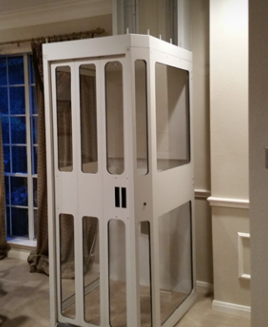
Our Legacy II stairlift is in the product line for stair travel; a vertical platform lift is a different choice when the rider stays on a mobility device through a shorter level change. The EZ residential elevators are designed for travel between floors in suitable homes. These descriptions orient a buyer; final product suitability requires model-specific dimensions and a site survey.
Compare the Route and Construction
A stairlift uses an existing stair route, but its track, parking position, clear stair width, landing, and transfer space must be reviewed. A platform lift needs sufficient approach and exit space as well as the correct rise, support, and gate layout. An indoor residential elevator may require a floor opening and coordinated work at multiple levels. An outdoor elevator may avoid cutting through interior floors but needs a suitable building connection and exposed landings. Every category has construction, access, and approval questions.
The cheapest item on a product list may not create the cheapest usable route. A platform lift could require rebuilding a porch. A residential elevator could require carpentry and finish work. A stairlift could leave the rider unable to reach the room beyond the landing. We would ask for a project scope that includes the route before and after the equipment, not only a product quote. The dealer, installer, builder, and local authority each have a role in confirming feasibility.
Put two or three potential routes on the same floor plan. A person might reach the main floor more easily through a garage entrance than through the front porch; an elevator location could solve bedroom access while a stairlift serves only the stair itself. Compare destinations and daily trip count rather than equipment prices alone. The solution that is less invasive to install can still demand repeated transfers or leave a difficult exterior threshold for every departure from home.
For a person using a wheelchair, measure the device as actually configured, including footrests and controls. At a landing, there must be room to approach, board, exit, and reach the next door. The U.S. Access Board’s clear-space guide illustrates why approach and turning space affect accessibility. Its ADA criteria have a defined legal scope, so we use it as a planning reference and leave the applicable rules for a particular residence to local professionals.
Treat Power and Support as Purchase Questions
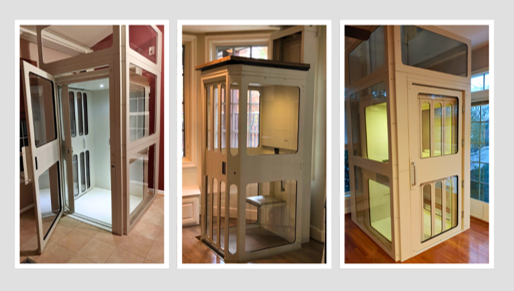
Our battery-operated elevator products differ from units with an emergency-only battery backup. The residential model description explains that selected products can travel in both directions on batteries during an outage. The household should still ask about charging, service intervals, battery replacement, and how to obtain assistance if the unit stops. Similar questions belong in a comparison of any lift or stairlift. Features vary by model; confirm them from the actual manual.
Service after installation deserves as much attention as the installation date. Who will maintain the equipment? Who answers a service request? Are replacement parts and inspection visits included in a contract or billed separately? What documentation will the owner receive? A household planning to age in place may rely on the system every day, so a clear ownership and maintenance arrangement is part of the buying decision.
Make sure the person using the equipment can participate in a demonstration or discuss controls before the final selection. The position of a seat, gate, or control can make a product easy for one rider and frustrating for another. If the user has limited hand strength or vision, tell the dealer. A product sheet’s capacity and travel distance will not resolve those usability questions. Ask the installer how the rider and caregiver will learn the operating and emergency procedures after installation.
An elevator or lift also does not eliminate the need for a plan for fire, prolonged outages, or equipment failure. A family may need an accessible alternative route or help from people they trust. We can discuss equipment functions and limits, but emergency and clinical decisions belong to the household with relevant local professionals. Avoid relying on a general marketing statement as a substitute for an individual safety plan.
Match the Proposal to the Household’s Time Horizon
Some buyers are adapting a home after a sudden mobility change; others are designing a new home for long-term flexibility. They may value different things: speed, minimal remodeling, capacity for a future chair, or access to several levels. Ask what is needed now and what should remain possible later. Not every hypothetical future need justifies a larger installation today, but overlooking a likely change can lead to paying for another solution soon afterward.
Bring a rough floor plan, photos of the difficult route, the rider’s device dimensions, the number of floors or steps, and the desired timeline. We can help sort product families and point the buyer to planning drawings and a dealer. A site professional should then confirm the actual layout, permit path, and installation scope. A useful proposal states which user and route it serves, who does the building work, and what remains unverified.
For a family comparing options, the decisive question is simple: “Can this particular person use this entire route on a normal day, with the equipment and assistance they actually have?” Answer that in measured, practical terms. The equipment decision becomes clearer, and so do the questions to ask before placing an order.
Frequently Asked Questions
Is a Stairlift the Same as a Wheelchair Lift?
No. A seated stairlift requires a transfer to its chair, while a suitable platform lift can carry the user on a mobility device within the selected model’s limits. The person’s transfer ability is a central selection factor.
Will an Elevator Always Be the Best Long-Term Choice?
No. It may suit travel between floors, but layout, construction, user needs, budget, and maintenance all matter. A simpler solution may serve a single short level change more directly.
What Should Be Measured Before Comparing Prices?
Measure the route at both ends, rise or floor-to-floor travel, available landing space, and the user’s actual mobility equipment. Ask providers to show equipment, site work, installation, approvals, and service as separate parts of the proposal.

Ready to get started? Reach out to us online at Staying Home or, if you’re curious, give us a call at 877-378-4275, and we’ll send you the details. We are a small company based in Missouri, and we’ve helped a lot of folks stay comfortable in the homes they love.
Look, we get it. Stairs can get tough. Whether you’re planning ahead or already feeling the strain, adding an elevator to your home might be easier than you think. Ours don’t need a huge remodel or fancy setup. They even run when the power goes out.
No pushy sales stuff. Just honest conversations about accessibility solutions for homes and what might work for you.
