
An elevated home creates a very specific travel problem: reaching the living level from the ground without turning a long flight of exterior stairs into a daily obstacle. We would compare an outdoor elevator with other access solutions by the rise, number of stops, landing layout, user, exposure, and construction conditions. Our residential and outdoor elevator overview introduces the Outlook line, but a model’s advertised travel range alone cannot tell a homeowner whether it fits an elevated entry.
Trace the Trip From Parking to the Front Door
Where does the rider arrive? If a vehicle parks on sloped gravel or a narrow driveway, the lower landing may be harder to use than the lift itself. Note the walking or wheeling path, grade, drainage, door thresholds, and space needed to approach and turn. At the upper level, measure the distance to the actual entry and whether a porch, deck, or landing can support the proposed connection. A builder and installer should evaluate both landings together. A lift that stops beside an inaccessible doorway has solved only the vertical portion of the trip.
Consider a coastal-style raised house with a ground-level parking area and a living floor above. A family may picture a lift beside the stairs. The stair landing, however, could be too narrow for a power chair to turn at the top. The better location may require a new walkway or modified deck, which changes the building scope. We would ask for photos and a sketch of the complete route before suggesting a configuration. The difference between equipment and a usable route is central to a realistic quote.
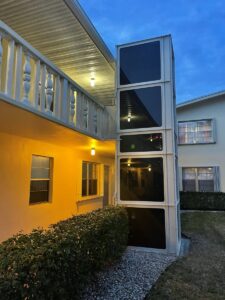
Our Outlook outdoor elevator information page describes a battery-operated product for elevated outdoor access with multiple stops available within its stated limits. The manufacturer information can help screen possibilities; the dealer still needs to verify the selected configuration’s travel, footprint, entrances, foundation, and attachments. Do not extrapolate one model’s specifications to every outdoor lift or assume a particular home supports the full published travel distance.
Account for Weather Without Relying on a Label
Exterior equipment faces rain, sun, temperature changes, and site-specific exposure. Ask where water drains away, whether the lower landing floods, how debris is kept clear, and which finishes and service intervals the selected model requires. In high-wind or coastal locations, a building professional must evaluate local wind loads, anchorage, permitting, and how an elevator interfaces with the structure. The phrase “hurricane-rated” on a general marketing page is not proof that every configuration satisfies a particular jurisdiction’s requirements.
The entrance should be considered during bad weather as well as on a dry day. An uncovered lower landing might be exposed to runoff; a top landing could have a door swing that narrows the available space. Ask whether weather protection, site grading, or a landing rebuild is in the builder’s scope. A product can be designed for exterior operation and still need a site-specific installation and maintenance plan. We would make those conditions explicit before describing the project as straightforward.
Battery operation is another practical question. The Outlook description says the unit can make multiple trips in both directions on its batteries when power is out. Ask the dealer how the chosen model charges, how battery health is checked, and what the user should do during a prolonged outage or service interruption. We do not equate an equipment feature with a complete emergency access plan. Households with significant mobility or medical needs should plan alternatives with their support team.
Compare Outdoor Options by Their Actual Purpose
An outdoor elevator and a residential vertical platform lift can both move a person between levels, but the design, travel, enclosure, entrance, and intended use differ. A short rise at an entry might be served differently from several stops along a tall exterior wall. We would ask how far the person must travel, how many landings are required, and which device or companion must ride. Product labels are insufficient without these facts.
The yard also matters. An installation may need a clear footprint, footing or other support, route to the upper landing, and service access. A homeowner should ask who designs and builds those elements, who secures permits, and how the equipment is maintained. Equipment, site construction, electrical work, and finish work may involve different parties. Compare complete installed scopes rather than an equipment price beside a contractor’s verbal guess.
Property boundaries and utilities may constrain the best-looking location. A lift placed along a side wall could compete with a required walkway or gate, or it could sit above underground lines. Before committing to a layout, obtain the site’s utility and property information and have local professionals evaluate it. If the installer needs access for future servicing, leave that area available in the finished landscape. The attractive spot closest to the stairs is not necessarily the spot that supports a safe installation and useful landings.
If a home is near a lake and the goal is movement down a steep hill to the water rather than access to an elevated entrance, our lake home lift addresses a different route. The distinctions should be explained before a buyer settles on a model. An outdoor elevator designed around a building facade and a system for a long sloping path solve different geometric problems, even if both are called lifts in casual conversation.
Prepare a Useful Project Conversation
Bring photos from the driveway and both intended landings, a sketch of the building elevation, the approximate height difference, and dimensions of any mobility equipment. Identify the number of desired stops and who will ride. Tell us about flooding, high winds, salt exposure, and any limits on where a new landing could be built. We can then discuss equipment possibilities and point the owner to dealer and technical documentation.
The final decision belongs in an approved site plan. A local builder or engineer should confirm structure and site work; the dealer or installer should confirm product fit, operating clearances, and service arrangements; local officials determine required approvals. A strong recommendation states what is known, what must be measured, and what is excluded from the quoted work. That is the bridge between an appealing outdoor product and a safe everyday route.
The buyer should also ask about ownership after installation. Who explains routine operation to the household, who responds if the equipment stops, and who will inspect or maintain the system? Is a service visit available locally through the dealer? A nationally sold product still needs a practical service relationship at the property. Put those contacts and responsibilities with the manual and approved drawings so that a future occupant can understand the installed system.
Ask the household to walk the proposed lower approach with the actual mobility device before site work begins. A driveway slope, soft ground, or tight turn can undermine an otherwise workable lift. Record any grading or walkway improvements as part of the project so the equipment does not become an isolated island of access.
Frequently Asked Questions
Can an Outlook Outdoor Elevator Serve More Than One Landing?
The product information describes configurations with multiple stops within stated travel limits. The dealer must confirm the selected model, exact rise, entry arrangements, and structural plan for the property.
Does Battery Operation Mean We Can Ignore Outages?
No. Batteries need charging and maintenance, and any outage can outlast available travel. Review the selected model’s instructions and plan another way to manage essential access or evacuation.
Is an Outdoor Elevator Automatically Suitable for a Hurricane Area?
No single marketing description can establish that. Wind exposure, anchorage, local rules, and the chosen configuration require review by qualified local professionals before installation.

Ready to get started? Reach out to us online at Staying Home or, if you’re curious, give us a call at 877-378-4275, and we’ll send you the details. We are a small company based in Missouri, and we’ve helped a lot of folks stay comfortable in the homes they love.
Look, we get it. Stairs can get tough. Whether you’re planning ahead or already feeling the strain, adding an elevator to your home might be easier than you think. Ours don’t need a huge remodel or fancy setup. They even run when the power goes out.
No pushy sales stuff. Just honest conversations about what might work for you.
